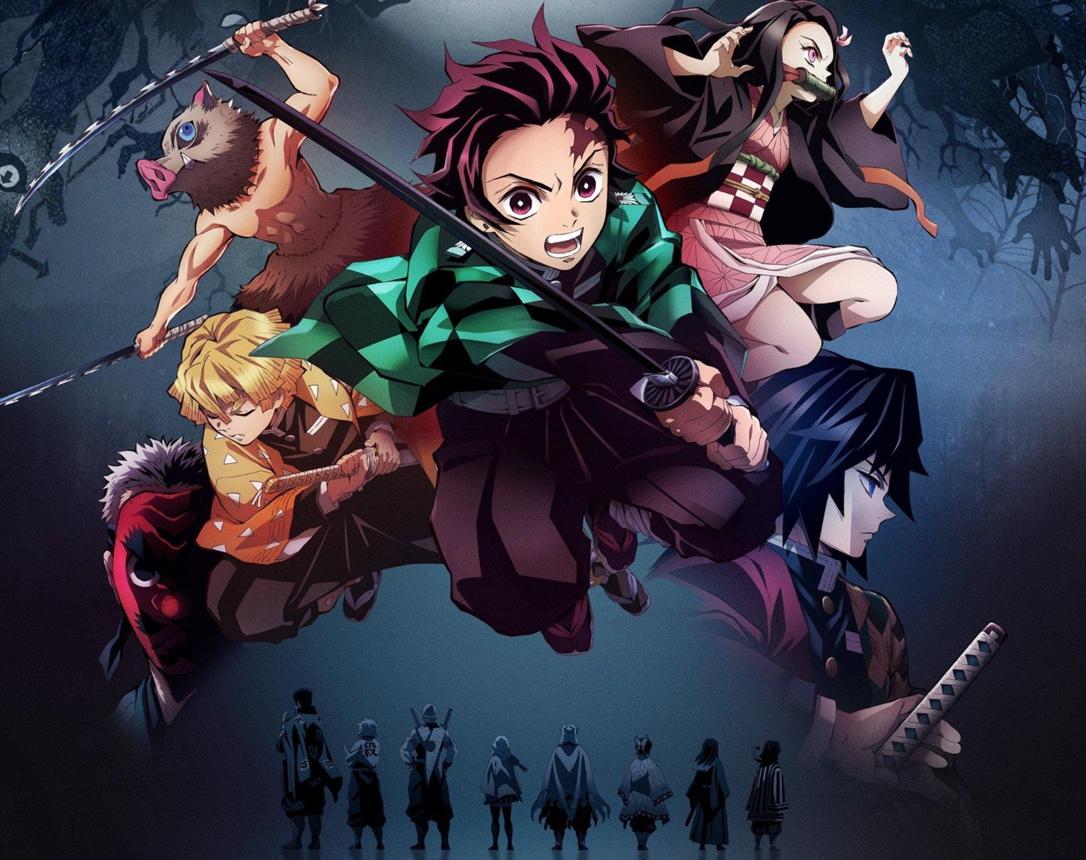
Demon Slayer Breathing Techniques Explained: The Complete Guide
Breathing techniques in Demon Slayer are not magic—they are hyper-optimized martial arts that push human physiology to its absolute limit. By controlling oxygen intake, blood flow, and muscle tension, demon slayers temporarily enhance their physical capabilities to match demonic speed and strength. Each style mimics natural elements to create offensive patterns, defensive stances, and movement techniques tailored to the user’s physical and psychological makeup.
The breathing techniques of Demon Slayer are the series’ most defining feature. They’re not supernatural powers—they’re the result of centuries of refinement, passed down through generations of demon slayers who pushed human limits further than anyone thought possible. Understanding how they work, why they’re so effective, and what separates each style is essential to appreciating the series’ combat system.
The Science Behind Breathing Techniques
How Breathing Enhances Combat Ability
Breathing techniques function through a simple but profound principle: controlled respiration optimizes the body’s performance.
The physiological effects:
- Increased oxygen intake: More oxygen in the bloodstream means muscles fatigue slower and regenerate faster
- Enhanced blood circulation: Better flow delivers nutrients and removes waste products
- Nervous system activation: Controlled breathing triggers the sympathetic nervous system, sharpening reflexes
- Mental clarity: Rhythmic breathing reduces anxiety and improves focus
- Total body coordination: Breath synchronizes with movement for maximum efficiency
The secret to demon slayer strength: These techniques allow humans to temporarily exceed their normal physical limits. A slayer using Total Concentration Breathing can move faster, strike harder, and endure more than any ordinary human could. The catch is exhaustion—sustained use drains stamina rapidly.
Total Concentration Breathing
Total Concentration Breathing is the foundation of all demon slayer combat. Users inhale deeply, hold the breath, and release it in controlled patterns that match their movements. The goal is to keep the lungs at maximum capacity while maintaining mobility.
Key principles:
- Constant practice: Breathing must become automatic, even during combat
- Progressive improvement: Over time, users can maintain Total Concentration for longer
- Personal adaptation: Each slayer develops their own rhythm
- Physical conditioning: The body must be trained to handle increased oxygen
The mark of mastery: Slayers who can maintain Total Concentration Breathing continuously are recognized as Hashira-level. This requires years of training and exceptional natural aptitude.
The Elemental Styles
Breathing techniques are categorized by their “element”—the natural phenomenon they mimic. Each style’s forms reflect its element’s properties:
- Water: Flowing, adaptive, defensive
- Flame: Aggressive, powerful, relentless
- Thunder: Fast, direct, explosive
- Stone: Solid, unyielding, patient
- Wind: Swift, unpredictable, mobile
- Flower: Graceful, beautiful, precise
- Serpent: Winding, tricky, deceptive
- Love: Flexible, flowing, passionate
- Mist: Obscuring, disorienting, elusive
- Beast: Instinctive, primal, forceful
Water Breathing: The Foundation Style
Overview
Water Breathing is the most common of the five main styles, originating from the earliest days of the Demon Slayer Corps. Its strength lies in versatility—Water Breathing forms can be offensive, defensive, or counter-attacking depending on the user’s needs.
Key characteristics:
- Flowing movements that adapt to the opponent
- Strong defensive options
- Excellent for beginners
- Highly versatile in different combat situations
- Effective against multiple opponents
All Eleven Forms
First Form: Water Surface Slash
Description: A basic, horizontal slash delivered at the opponent’s neck or torso. Simple but effective—the foundation upon which all other forms are built.
Best for: Opening attacks, finishing weakened opponents, creating distance
Weakness: Predictable if overused; lacks power compared to later forms
Second Form: Water Wheel
Description: The user leaps into the air, spinning horizontally while delivering a circular slash. The technique uses momentum to generate cutting power.
Best for: Closing distance, surprising opponents, breaking through defenses
Weakness: Leaves the user vulnerable during the spin if interrupted
Third Form: Flowing Dance
Description: A series of continuous, flowing slashes that follow the opponent’s movements. The user adjusts their position with each strike, maintaining pressure.
Best for: Overwhelming opponents, maintaining offensive momentum, countering agile enemies
Weakness: Drains stamina quickly; less effective against heavily armored opponents
Fourth Form: Striking Tide
Description: A powerful upward slash delivered from a low stance. The technique’s trajectory makes it difficult to block.
Best for: Breaking through guards, upward attacks, surprising opponents
Weakness: Leaves the user open to counterattacks
Fifth Form: Blessed Rain After the Drought
Description: A gentle, rain-like pattern of slashes that appear almost dance-like. The technique focuses on precision over power.
Best for: Disarming opponents, targeting weak points, finishing battles without bloodshed
Weakness: Lower damage output; requires exceptional precision to be effective
Sixth Form: Whirlpool
Description: The user spins rapidly, creating a defensive whirlwind of slashes that deflect attacks and disorient opponents.
Best for: Defensive situations, crowd control, creating space
Weakness: Limited offensive capability; dizzying for the user
Seventh Form: Piercing Rain
Description: A rapid sequence of stabs and thrusts aimed at vital points. The technique sacrifices power for speed and precision.
Best for: Battles against demons with strong regeneration, wearing down opponents
Weakness: Less effective against armored opponents; requires accuracy
Eighth Form: Waterfall Basin
Description: A defensive technique that redirects incoming attacks downward, using the opponent’s momentum against them.
Best for: Countering heavy attacks, defensive situations
Weakness: Ineffective against ranged attacks or multiple opponents
Ninth Form: Splash Flow
Description: A series of slashes that create a flowing pattern, disrupting the opponent’s rhythm and creating openings.
Best for: Breaking through defenses, disorienting opponents
Weakness: Requires space to execute properly
Tenth Form: Constant Flux
Description: A sustained barrage of attacks that maintain constant pressure on the opponent. The user moves continuously, never giving the opponent time to recover.
Best for: Pressuring opponents, wearing down defenses, finishing fights
Weakness: Exhausting; requires exceptional endurance
Eleventh Form: Dead Calm
Description: The ultimate Water Breathing technique. The user enters a state of absolute stillness, perceiving and cutting incoming attacks with perfect precision.
Best for: Defensive situations, countering multiple attacks, displaying mastery
Weakness: Requires years of training; leaves the user vulnerable if overwhelmed
Key users: Tanjiro Kamado, Giyu Tomioka, Sabito (deceased)
Flame Breathing: The Aggressive Style
Overview
Flame Breathing is the most aggressive of the five main styles. Derived from the original Sun Breathing technique, it prioritizes overwhelming power and relentless offense.
Key characteristics:
- High power output
- Aggressive offensive patterns
- Requires exceptional physical strength
- Short range but devastating
- Demands high stamina
All Nine Forms
First Form: Unknowing Fire
Description: A rapid thrust aimed at the opponent’s chest or throat. The technique is fast and difficult to read.
Best for: Opening attacks, finishing moves, quick strikes
Weakness: Lower range; telegraphs easily if poorly executed
Second Form: Flame Tiger
Description: The user creates a tiger-shaped pattern with their blade, delivering a powerful slashing attack.
Best for: Breaking through guards, intimidating opponents
Weakness: Requires significant power; slower than other forms
Third Form: Blazing Universe
Description: A wide horizontal slash that covers a large area. The technique is excellent for crowd control.
Best for: Multiple opponents, creating space
Weakness: Lower power than other forms; exposes the user’s side
Fourth Form: Burning Bones
Description: A series of multi-angle attacks delivered in rapid succession. The technique targets multiple body parts simultaneously.
Best for: Pressuring opponents, overwhelming defenses
Weakness: Drains stamina quickly; requires accuracy
Fifth Form: Flame Dance
Description: A spinning attack that generates momentum for a powerful slashing finish.
Best for: Breaking through defenses, delivering powerful strikes
Weakness: Predictable if overused; vulnerable during the spin
Sixth Form: Rengoku’s Flame
Description: The ultimate Flame Breathing technique. The user delivers an overwhelmingly powerful slash at maximum speed and power.
Best for: Finishing battles, breaking through ultimate defenses
Weakness: Exhausting; leaves the user vulnerable after execution
Key users: Kyojuro Rengoku, Senjuro Rengoku (in training)
Thunder Breathing: The Speed Style
Overview
Thunder Breathing prioritizes speed above all else. The style’s forms are designed to close distance instantly and strike before the opponent can react.
Key characteristics:
- Extreme speed
- Direct, linear attacks
- Explosive power
- Requires exceptional leg strength
- Limited defensive options
The Forms
First Form: Thunderclap and Flash
Description: A lightning-fast thrust delivered at maximum speed. The technique is so fast that it appears as a flash of light.
Best for: Finishing moves, surprise attacks, first strikes
Weakness: Linear trajectory makes it predictable; no follow-up options
Second Form: Six Fold
Description: Six consecutive Thunderclap and Flash attacks delivered in rapid succession.
Best for: Multiple targets, overwhelming defenses
Weakness: Extremely exhausting; requires perfect execution
Third Form: Eight Fold
Description: Eight consecutive Thunderclap and Flash attacks, the ultimate Thunder Breathing offensive.
Best for: Elite opponents, battles of attrition
Weakness: Cannot be sustained; one-shot technique
Key users: Zenitsu Agatsuma, Jigoro Kuwajima
Note: Zenitsu only mastered the First Form, but his execution is so perfect that he defeated opponents who had mastered all other forms.
Other Major Breathing Styles
Stone Breathing
Overview: The most physically demanding style, Stone Breathing relies on immense strength and endurance. It’s the slowest of the main styles but offers unparalleled power and defense.
Key users: Gyomei Himejima
Notable techniques:
- First Form: Stone’s Fury - A devastating downward strike
- Defensive techniques - The style emphasizes blocking and countering over dodging
Strengths: Immense power, superior defense, area denial
Weaknesses: Low speed, requires exceptional physical strength, limited mobility
Wind Breathing
Overview: Wind Breathing emphasizes speed and unpredictability. The style’s movements are erratic, making it difficult to read.
Key users: Sanemi Shinazugawa
Notable techniques:
- Whirlwind - A spinning slash that creates a defensive barrier
- Gale Force - A rapid thrust that pushes opponents back
Strengths: Unpredictable patterns, mobility, speed
Weaknesses: Lower power, requires constant movement, stamina drain
Flower Breathing
Overview: An elegant and precise style derived from Water Breathing. Flower Breathing emphasizes beauty and accuracy over raw power.
Key users: Kanae Kocho, Shinobu Kocho (modified to Insect Breathing)
Notable techniques:
- Dance of the Flower - A flowing series of slashes
- Wisteria Petal’s Dance - A defensive technique
Strengths: Precision, grace, defensive options
Weaknesses: Low power, requires exceptional technique
Serpent Breathing
Overview: A winding, deceptive style that uses unexpected angles and trajectories.
Key users: Obanai Iguro
Notable techniques:
- Serpent’s Bite - A quick, accurate thrust
- Coiling Serpent - A technique that wraps around defenses
Strengths: Unpredictable trajectories, deceptive patterns, accuracy
Weaknesses: Lower power, requires flexibility
Love Breathing
Overview: A flexible style that emphasizes flowing movement and adaptability.
Key users: Mitsuri Kanroji
Notable techniques:
- Love’s Embrace - A defensive technique
- Burning Love - An aggressive offensive form
Strengths: Adaptability, defensive options, flexibility
Weaknesses: Requires unique body composition, difficult to master
Mist Breathing
Overview: An elusive style that uses the “Mist” to obscure the user’s movements and disorient opponents.
Key users: Muichiro Tokito
Notable techniques:
- Obscuring Mist - A defensive technique
- Mist’s Cloak - A movement technique for evasion
Strengths: Disorientation, evasion, unexpected patterns
Weaknesses: Lower power, requires spatial awareness
Insect Breathing
Overview: A unique style derived from Flower Breathing, specialized for the use of poison. Shinobu’s small frame prevented her from developing the physical strength to decapitate demons, so she adapted her style to use wisteria-based poison.
Key users: Shinobu Kocho
Notable techniques:
- Dance of the Bee - A rapid thrust
- Dance of the Dragonfly - A winding, evasive technique
Strengths: Speed, precision, poison effects
Weaknesses: Cannot decapitate demons without assistance, requires poison
Beast Breathing
Overview: An unique, self-taught style developed by Inosuke. It relies on animalistic instincts and unpredictable movements.
Key users: Inosuke Hashibira
Notable techniques:
- Boar Tusk - A powerful charging attack
- Wild Boar’s Charge - A relentless offensive
Strengths: Unpredictability, power, adaptability
Weaknesses: Lack of formal structure, less refined
Sun Breathing: The Original Technique
Overview
Sun Breathing is the original breathing technique, from which all other styles are derived. It was created by Yoriichi Tsugikuni, the greatest demon slayer in history, and represents the pinnacle of demon slayer combat.
Significance:
- The ancestor of all breathing styles
- Requires extraordinary natural talent
- Can only be used by those with a strong connection to the original
- Extremely difficult to master
Notable techniques:
- Sun’s Fist - The original form
- Flame’s Dance - The origin of Flame Breathing
- Various derivative forms - All other styles are fragments of Sun Breathing
Sun Breathing’s uniqueness: Unlike derivative styles, Sun Breathing doesn’t weaken when used by non-Hashira. Tanjiro’s use of Sun Breathing (which he calls Hinokami Kagura) allowed him to fight Upper Ranks despite his limited experience.
Hinokami Kagura: The Dance of the Fire God
Tanjiro’s family passed down a dance meant to honor the Fire God. In reality, this dance was a hidden form of Sun Breathing, preserved through centuries as a ritual. When Tanjiro discovered its combat applications, he unlocked a power that rivaled the Hashira.
Why Hinokami Kagura is unique:
- Tanjiro could use it without formal training
- It doesn’t degrade based on user level
- Its forms are more powerful than derivative equivalents
- It connects to the legacy of Yoriichi Tsugikuni
Breathing Techniques Comparison
Power Ranking
- Sun Breathing - The ultimate technique, surpassing all derivatives
- Stone Breathing - Maximum physical power
- Flame Breathing - The most aggressive offense
- Water Breathing - Versatile and balanced
- Thunder Breathing - Extreme speed
- Wind Breathing - Unpredictable patterns
- Mist Breathing - Elusive and disorienting
- Flower/Serpent/Love - Specialized styles
- Beast Breathing - Unrefined but effective
- Insect Breathing - Specialized, limited strength
Speed Ranking
- Thunder Breathing - Lightning-fast
- Wind Breathing - Quick and erratic
- Mist Breathing - Elusive and hard to track
- Water Breathing - Flowing and adaptive
- Sun Breathing - Can match all others when mastered
- Flame Breathing - Fast but less than Thunder
- Stone Breathing - The slowest
Defensive Ranking
- Stone Breathing - Unbreakable defense
- Water Breathing - Adaptive and flexible
- Flame Breathing - Offensive defense
- Mist Breathing - Avoidance over blocking
- Thunder Breathing - Fast attacks as defense
What Makes a Breathing Style Effective
Personal Compatibility
A breathing style is most effective when it matches the user’s natural abilities:
- Physical strength - Stone Breathing requires exceptional power
- Speed - Thunder Breathing demands leg strength and reflexes
- Flexibility - Love Breathing needs an adaptable body
- Precision - Flower Breathing requires exceptional control
- Instinct - Beast Breathing favors improvisation
Training and Experience
Even a weak style can be devastating in the right hands:
- Zenitsu mastered only one Thunder Breathing form, but his execution was perfect
- Tanjiro’s Sun Breathing was unrefined but still defeated Upper Ranks
- Shinobu adapted Flower Breathing to create Insect Breathing, compensating for her weakness
External Factors
- Environmental conditions - Some styles work better in certain terrains
- Opponent’s style - Water Breathing counters aggressive styles well
- Teamwork - Multiple styles can complement each other
Frequently Asked Questions
What is the strongest breathing technique?
Sun Breathing is the strongest, followed by Stone Breathing for pure power and Flame Breathing for offensive aggression. Sun Breathing surpasses all others because it’s the original technique from which all other styles are derived.
Can anyone use Sun Breathing?
No. Sun Breathing requires exceptional natural talent and a connection to the original technique. Tanjiro could use it because his family preserved the dance, and he had the necessary aptitude. Most slayers cannot use Sun Breathing at all.
Why are there 11 Water Breathing forms but only 9 Flame Breathing forms?
Different styles evolved in different directions. Water Breathing’s adaptability led to more forms, while Flame Breathing focused on fewer, more powerful techniques.
What’s the difference between Breathing Techniques and Demon Blood Arts?
Breathing Techniques are martial arts developed by humans to enhance their physical capabilities. Demon Blood Arts are supernatural abilities granted by Muzan Kibutsuji’s blood.
Can a slayer learn multiple breathing styles?
Yes, but it’s rare. Tanjiro learned Water Breathing first, then developed Sun Breathing later. However, the styles are significantly different—most slayers specialize in one.
Why is Zenitsu only capable of one Thunder Breathing form?
Zenitsu’s fear of combat limited his growth, but his mastery of the First Form was so absolute that he could defeat opponents who had mastered all other forms. The series suggests his talent could have rivaled the Hashira if he had been more willing to learn.
What’s the rarest breathing style?
Mist Breathing is among the rarest, used only by Muichiro Tokito. Sun Breathing is even rarer—only Yoriichi and Tanjiro are confirmed users.
Conclusion: The Beauty of the System
Demon Slayer’s breathing techniques are a perfect marriage of theme and mechanics. They’re not just a power system—they’re a reflection of each character’s personality, training, and journey.
Water Breathing’s adaptability reflects Tanjiro’s compassion and ability to understand others. Thunder Breathing’s speed mirrors Zenitsu’s hidden potential. Flame Breathing’s intensity embodies Rengoku’s passionate spirit. Every style is a window into the user’s soul.
The techniques also serve a larger thematic purpose. They represent humanity’s struggle against impossible odds—the idea that through discipline, training, and determination, ordinary people can achieve extraordinary things. The demon slayers aren’t born strong; they become strong through suffering, practice, and unwavering commitment.
And at the center of it all sits Sun Breathing—the original technique, a symbol of Yoriichi Tsugikuni’s unparalleled genius and the legacy he left behind. Every demon slayer who wields a blade carries that legacy forward, even if they don’t know it.
The breathing techniques of Demon Slayer aren’t just cool powers. They’re the beating heart of the series, a testament to the power of human will against impossible odds.
What’s your favorite breathing style? Which form would you use if you were a demon slayer? Share your thoughts below.
About the Author
A passionate analyst of anime’s most complex systems, I’ve spent years studying the mechanics that make shonen combat compelling. Demon Slayer’s breathing techniques represent one of the best-designed systems in modern anime—simple enough to understand, deep enough to reward careful analysis. If you’re interested in more breakdowns of anime’s most fascinating mechanics, check out my other guides.