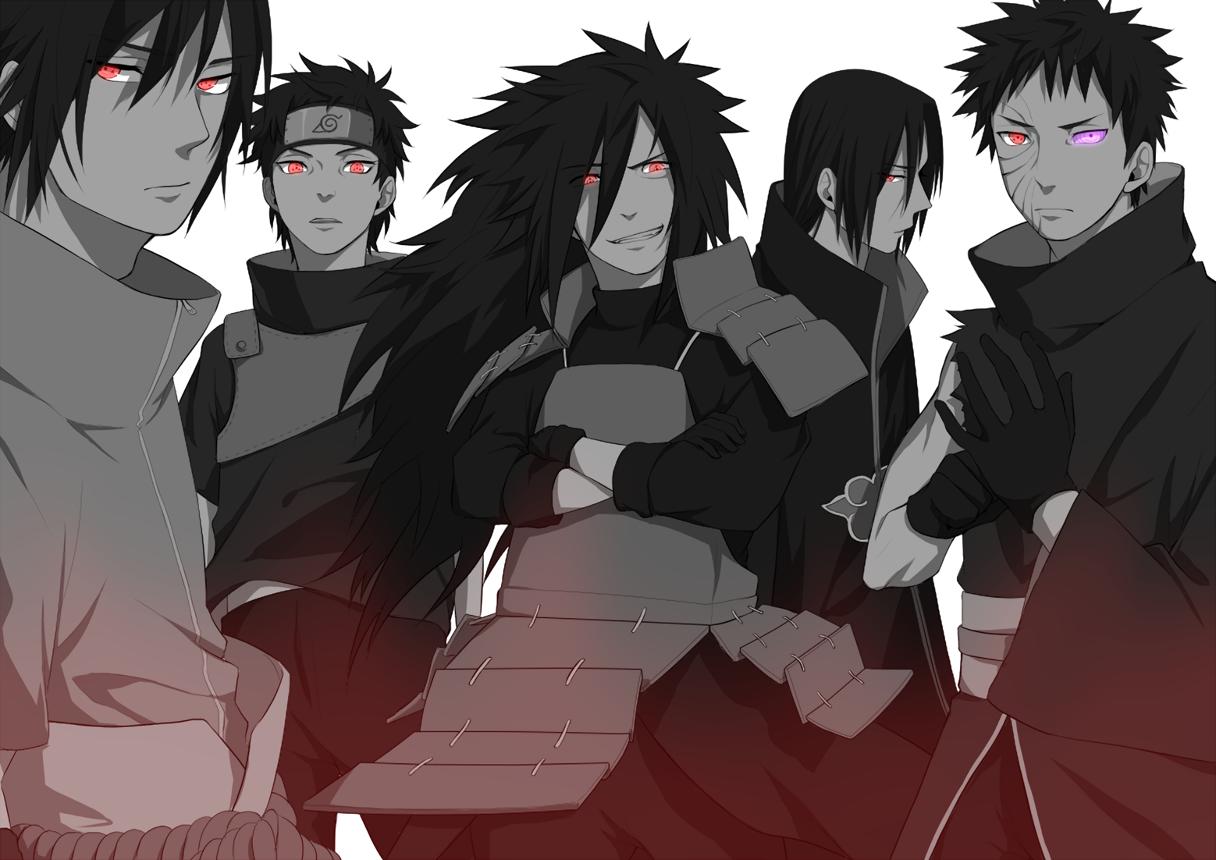
The Complete Uchiha Clan History: Tragedy, Power, and Redemption
The Uchiha clan’s story isn’t just about power—it’s about love twisted into hatred, protection warped into destruction, and a curse that spanned millennia. From Indra Otsutsuki’s jealousy to Sasuke’s redemption, the Uchiha legacy is the most tragic and compelling narrative in Naruto. Their history is a warning: the greatest strength, when born from the deepest love, can become the most devastating weakness.
No clan in Naruto carries as much weight as the Uchiha. They are the series’ emotional core, its most complex characters, and its greatest tragedy. Their story isn’t just backstory—it’s the key to understanding everything about Naruto’s world: the cycle of hatred, the nature of power, and the possibility of redemption.
This is the complete history of the Uchiha clan.
Part I: The Origins - Indra and the Birth of the Curse
The Sage of Six Paths and His Sons
The Uchiha clan’s story begins with Hagoromo Otsutsuki—the Sage of Six Paths—and his two sons. Hagoromo was the first person to understand chakra, the progenitor of all ninja, and the savior who defeated the Ten-Tails. His legacy shaped the entire world.
But his sons were the ones who defined the future.
Indra Otsutsuki was Hagoromo’s eldest son. He inherited his father’s powerful chakra and his genius for combat. He was proud, talented, and deeply ambitious. Asura Otsutsuki was the younger son. He lacked Indra’s natural talent but possessed something his brother didn’t: the ability to connect with others and build trust.
The Conflict That Defined an Era
Hagoromo chose Asura as his successor. It was a devastating blow to Indra, who had always believed he was the superior son. His jealousy festered. His pride was wounded. And he refused to accept his father’s decision.
Indra created the Uchiha clan from his own lineage. He passed down his powerful chakra, his Sharingan, and most importantly—his curse. The Uchiha would forever carry his burden: the obsession with power, the fear of inadequacy, and the tendency to let love turn into hatred.
Asura created the Senju clan, inheriting his father’s philosophy of cooperation and peace. The Senju would become the Uchiha’s eternal rivals—and the founders of the village system that would eventually unite the ninja world.
The parallel is unmistakable: Indra and Asura are Naruto and Sasuke. The same conflict, the same dynamic, repeated across millennia. And just like their predecessors, Naruto and Sasuke would eventually break the cycle.
The Curse of Hatred
The Uchiha’s “curse of hatred” isn’t a supernatural affliction—it’s a psychological pattern. The clan’s power is tied to emotion. When they love deeply, they can protect fiercely. But when they lose that love, that protection turns to destruction.
The Sharingan’s evolution reflects this:
- Base Sharingan: Awakens through emotional stress
- Mangekyo Sharingan: Awakens through the trauma of losing someone close
- Eternal Mangekyo: Requires transplanting a family member’s eyes
- Rinnegan: The ultimate evolution, achieved through extreme suffering
Every evolution requires sacrifice. Every step forward involves loss. The Uchiha are trapped in a cycle where power and pain are inextricably linked.
Part II: The Warring States Period - Madara and Hashirama
The Era of Endless Conflict
For centuries, the Uchiha and Senju clans fought an endless war. Generations of hatred, each conflict breeding the next. Children were trained to kill from birth. Families were torn apart. And the cycle of violence continued without pause.
This was the world Madara Uchiha and Hashirama Senju inherited. Two boys born to rival clans, destined to hate each other—and instead, they became friends.
The Dream of Peace
Hashirama and Madara’s friendship was forged on a riverbank, skipping stones and dreaming of something better. They imagined a world where children didn’t have to fight. Where clans could coexist. Where peace was more than just a word.
Their dream was genuine. But the world wasn’t ready.
When their clans discovered their friendship, the boys were forced to separate. They grew up, became leaders, and continued the war. The dream of peace became something they fought for as enemies.
The Founding of Konoha
After years of conflict, Hashirama offered Madara a truce. They would create a village—Konohagakure—where clans could live together in peace. The Uchiha and Senju would be the founding clans.
Madara was skeptical. He understood that peace was fragile. He feared the Uchiha would eventually be marginalized—or worse, eliminated. And he was right.
But he accepted the truce anyway. Because he still believed in the dream Hashirama had shown him.
The First Hokage and the Betrayal
Hashirama was named the First Hokage. Madara was his equal in power, but he was not chosen. The Uchiha were relegated to the police force—honorable, but also a way to keep them separate and monitored.
Madara’s suspicion grew. He could see the writing on the wall. The Senju were in control. The Uchiha were being pushed to the margins. And Hashirama’s promise of equality was slowly being eroded.
He tried to warn the clan. But they didn’t believe him. They trusted Hashirama. They trusted the village.
Madara left Konoha. He fought Hashirama at the Valley of the End—a battle that would define the series. He was defeated, but his ideology survived. He would eventually return as the mastermind behind the Akatsuki and the Fourth Great Ninja War.
The Curse of the Uchiha
Madara’s betrayal wasn’t just about power—it was about love. He loved Hashirama. He believed in their dream. But when he saw the dream being corrupted, his love turned to hatred.
The curse of hatred in action: Madara couldn’t forgive. He couldn’t accept. He couldn’t let go. His love for Hashirama became his greatest weakness—and his greatest weapon.
Part III: The Village Era - Marginalization and Resentment
The Uchiha’s Role in Konoha
For decades, the Uchiha served Konoha faithfully. Their police force maintained order. Their Sharingan was invaluable in battle. They were respected—but never fully trusted.
The underlying tension was always present:
- The Uchiha were segregated to their own district
- They were monitored by the village’s intelligence division
- Their loyalty was perpetually questioned
- Their power was feared as much as it was respected
The Senju’s legacy was “Will of Fire”—the philosophy of sacrifice for the village. The Uchiha were expected to follow this philosophy, but they were never fully included in it.
The Nine-Tails Attack
When the Nine-Tails attacked Konoha on October 10th, the Uchiha were ordered to stand down. They were not allowed to help defend the village. The official reason was to prevent them from using their Sharingan to control the beast—but the true reason was fear.
The village leadership suspected the Uchiha. They believed someone in the clan had summoned the Nine-Tails. The suspicion was wrong—Tobi (Obito Uchiha) was the culprit—but it reinforced the distrust.
The Uchiha felt the sting deeply. They had been blamed for something they didn’t do. Their loyalty was called into question. And they began to realize that the village would never fully accept them.
The Uchiha’s Response
The clan’s reaction was predictable: they began planning a coup. They would seize control of the village or die trying. The dream of coexistence was over. The only option was war.
The leadership was divided:
- The elders wanted to fight. They were tired of being marginalized. They believed they deserved better.
- The moderates wanted to negotiate. They believed peace was still possible.
- Itachi Uchiha, the young prodigy, was caught in the middle.
Itachi was a double agent. He loved his clan, but he also loved the village. He had seen the cycle of hatred up close—and he refused to let it continue.
Part IV: The Massacre - Itachi’s Tragic Choice
The Fatal Decision
Itachi Uchiha made the hardest choice in the series: he killed his entire clan to prevent a civil war. His reasons were complex, tragic, and ultimately heroic.
He had three options:
- Let the coup happen. The village would be torn apart. Thousands would die. The cycle of hatred would continue.
- Betray the village. The Uchiha would survive, but the village would be destroyed.
- Stop the coup. By any means necessary.
Itachi chose the third option. He was 13 years old.
The Night of the Massacre
The massacre was methodical. Itachi killed his family, his friends, his fellow clansmen. He left only one survivor: his younger brother, Sasuke.
The reasons for sparing Sasuke were complex:
- Itachi wanted Sasuke to live
- He wanted Sasuke to seek revenge—to become strong enough to kill him
- He wanted to die at Sasuke’s hands as atonement
Itachi’s sacrifice was absolute: He would become the villain. He would let his brother hate him. He would be the monster. All to protect the village and give Sasuke a purpose.
The Truth Behind the Mask
For years, Sasuke believed Itachi was a monster. He dedicated his life to revenge. He grew strong, joined Orochimaru, and eventually confronted his brother.
The truth was devastating:
- Itachi loved Sasuke more than anything
- He had sacrificed everything for his brother and the village
- He had been a double agent, working to protect Konoha from the shadows
- He had a terminal illness and was planning to die at Sasuke’s hands anyway
The revelation broke Sasuke. Everything he believed was a lie. His revenge was meaningless. His hatred was misplaced. His entire identity was shattered.
Itachi’s Legacy
Itachi’s decision echoes throughout the series:
- Sasuke’s entire arc is defined by his brother’s sacrifice
- The massacre shapes the village’s politics for decades
- Itachi’s selflessness—and his willingness to suffer—becomes a model for redemption
- His actions prove that the cycle of hatred can be broken, but only at a terrible cost
Itachi is the most tragic character in Naruto. He did everything wrong for the right reasons. And he paid the ultimate price.
Part V: Sasuke’s Journey - From Revenge to Redemption
The Obsession
Sasuke’s early life was defined by one goal: kill Itachi. He trained relentlessly. He pursued power without hesitation. He abandoned his friends to seek strength from Orochimaru.
His obsession was understandable but destructive:
- It isolated him from people who loved him
- It blinded him to alternative paths
- It consumed his identity
- It nearly destroyed him
The Truth and Its Aftermath
When Sasuke learned the truth about Itachi, his worldview collapsed. His goal was gone. His identity was shattered. He had nothing left.
His response was dark:
- He aligned with the Akatsuki
- He attacked the Five Kage Summit
- He sought to destroy Konoha
- He was consumed by rage and grief
The darkness was real. Sasuke had become everything Itachi had tried to protect him from: a vessel for hatred, a tool of destruction, a threat to everything he once valued.
The Final Battle
Naruto vs Sasuke at the Final Valley was inevitable. The two friends, the reincarnations of Indra and Asura, fighting for their beliefs.
Naruto represented the path of Asura:
- Connection with others
- Trust in friendship
- Hope for understanding
- The belief that peace is possible
Sasuke represented the path of Indra:
- Power through isolation
- Fear of attachment
- Control through domination
- The belief that only strength creates peace
The battle was brutal. Both were exhausted. Both were broken. But ultimately, Naruto’s stubbornness—his refusal to give up—won the day.
The resolution was beautiful: Sasuke acknowledged Naruto. He acknowledged his friends. He acknowledged that he had been wrong. And he began the long journey toward redemption.
Sasuke’s Redemption
Sasuke’s path after the Final Valley is one of quiet atonement:
- He becomes a shadow ninja, protecting the village from threats
- He forms a family with Sakura and has a daughter, Sarada
- He trains Boruto and passes on his legacy
- He lives with his mistakes, knowing he can never fully escape them
Sasuke is the series’ greatest redemption story. He goes from villain to hero, from lost to found, from hatred to love. His journey proves that the Uchiha curse can be broken—but only through effort, time, and connection.
Part VI: The Uchiha Legacy - What Remains
The Bloodline Continues
The Uchiha clan is not entirely dead:
- Sasuke Uchiha carries the clan’s legacy forward
- Sarada Uchiha is the next generation—a young ninja who wants to become Hokage
- Her eyes hold the Sharingan and the potential for even greater power
Sarada represents hope: She is the symbol of what the Uchiha could become—a clan defined not by tragedy but by progress, not by hatred but by love.
The Symbolism of the Uchiha
The Uchiha clan represents several key themes in Naruto:
- The cycle of hatred: Their history is a warning about the dangers of letting fear and anger control us
- The power of love: Their greatest strength comes from protecting loved ones—and their greatest weakness comes from losing them
- The possibility of redemption: Their story proves that even the darkest paths can lead to light
- The importance of connection: Their isolation was their downfall; their bonds with others are their salvation
Why the Uchiha Story Matters
The Uchiha clan is not just backstory—it’s the soul of Naruto. Every major theme in the series connects to them:
- Naruto vs Sasuke: The eternal conflict between brothers
- Obito vs Kakashi: The tragedy of friendship destroyed by hatred
- Itachi’s sacrifice: The cost of protecting what you love
- Sasuke’s redemption: The journey from darkness to light
The Uchiha’s story is universal: It’s about loss, love, and the choices we make in the face of suffering. It’s about the burden of legacy and the hope of redemption.
Frequently Asked Questions
Who founded the Uchiha clan?
The Uchiha clan was founded by Indra Otsutsuki, the son of Hagoromo Otsutsuki (the Sage of Six Paths). Indra passed down his powerful chakra and the Sharingan to his descendants.
Why did the Uchiha clan hate the Senju?
The Uchiha and Senju fought for centuries due to the philosophical divide between Indra and Asura. The conflict was rooted in their ancient rivalry and the cycle of hatred that followed.
Why did Itachi kill the Uchiha clan?
Itachi killed the Uchiha clan to prevent a coup that would have destroyed Konoha. He acted to protect the village and spare Sasuke from the trauma of war.
Why did Madara leave Konoha?
Madara left Konoha because he believed the Senju were marginalizing the Uchiha. He felt the village was destined to betray his clan, and he was right.
What is the curse of hatred?
The curse of hatred is a psychological pattern among the Uchiha where love turns to hatred when they lose someone close. It’s what drives their obsession with power and revenge.
Does the Uchiha clan still exist?
The Uchiha clan survives through Sasuke and his daughter Sarada. The clan is no longer a political entity, but its legacy continues.
Why is the Uchiha clan so powerful?
The Uchiha clan’s power comes from the Sharingan, a Kekkei Genkai that grants exceptional perception, copying abilities, and the potential for awakening the Mangekyo Sharingan and Rinnegan.
What was the Uchiha clan’s role in Konoha?
The Uchiha served as the village’s police force and were key fighters in the First and Second Great Ninja Wars. They were respected but also monitored and marginalized.
How did Sasuke’s story end?
Sasuke achieved redemption by acknowledging his friends, forming a family, and protecting the village from the shadows. He is proof that the Uchiha curse can be broken.
What is the Uchiha clan’s legacy?
The Uchiha clan’s legacy is one of tragedy and redemption—a warning about the dangers of hatred and a testament to the power of love and connection.
Final Thoughts: The Uchiha’s Enduring Legacy
The Uchiha clan is one of anime’s greatest tragedies. Their history—from Indra’s jealousy to Sasuke’s redemption—is a masterclass in storytelling. It’s a story about power, love, and the choices that define us.
Why the Uchiha story resonates:
- It’s honest about pain
- It’s willing to show the worst of humanity
- It’s equally willing to show the best
- It offers hope without false promises
The Uchiha clan will always be remembered not for their power, but for their struggle. Not for their victories, but for their losses. Not for their hatred, but for their love.
And that’s what makes them unforgettable.
What’s your take on the Uchiha clan’s history? Is the curse real, or is it just a self-fulfilling prophecy? Let me know in the comments. I’d love to hear your perspective.
About the Author
A passionate Naruto scholar and lifelong fan of the series. I’ve spent years analyzing the Uchiha clan, their history, and their meaning. If you share that passion, feel free to reach out. The conversation never ends.
Keywords: Uchiha clan, Naruto, Sharingan, Itachi, Sasuke, massacre, history, origins